What Is an SEO Audit? A Guide for Local Businesses

You built a website for your business. Maybe you even paid good money for it. But when someone in your city searches for what you do, you're nowhere on the first page. What gives?
That's exactly the question an SEO audit answers. It's a structured look at your website that uncovers what's helping you show up in search results and, more importantly, what's holding you back.
98% of consumers now search online before choosing a local business, according to BrightLocal's 2025 consumer survey. If your site has issues you don't know about, you're losing customers to competitors who've already fixed theirs.
What Is an SEO Audit, Exactly?
An SEO audit is a health check for your website. Think of it like taking your car to a mechanic. You might know something feels off, but you need a professional to pop the hood, run diagnostics, and tell you exactly what needs fixing.
A proper audit reviews your site across several categories: technical setup, on-page content, local visibility, page speed, schema markup, image optimization, and (increasingly) how well AI search tools can read and recommend your business.
The result is a report that scores your site in each area and lists specific findings, ranked by how urgently they need attention. No guesswork. No vague advice. Just a clear picture of where you stand.
Why Local Businesses Need an SEO Audit
If you're a dentist in Phoenix, a plumber in Charlotte, or a family law attorney in Portland, your customers are searching with local intent. 46% of all Google searches include location-based terms like "near me" or a specific city name (Search Engine Roundtable, 2025). And 76% of people who search "near me" on their phone visit a business within 24 hours (Google).
That's a massive pool of ready-to-buy customers. But here's the catch: they only see the top results. Businesses in Google's Local 3-Pack get 126% more traffic and 93% more calls and clicks than businesses ranked 4 through 10 (BrightLocal).
An SEO audit tells you why you're not in that top group and what to change to get there.
It's Not Just About Rankings
Rankings matter, but an audit catches problems that affect your bottom line in other ways too. Slow page speed drives visitors away. Missing schema markup means Google can't display your hours, reviews, or services in search results. Broken links make your business look neglected. A good audit surfaces all of it.
What Does an SEO Audit Actually Check?
Every audit tool and agency structures things a little differently, but a thorough local business audit covers these core areas.
1. Technical SEO
This is the foundation. Technical SEO covers whether search engines can actually find, crawl, and index your pages. It includes things like:
Whether your site uses HTTPS (secure connection)
If your sitemap exists and is submitted to Google
Whether your robots.txt file is accidentally blocking important pages
Crawl errors, broken links, and redirect chains
Mobile-friendliness (Google uses the mobile version of your site for all rankings)
Here's what that looks like in practice: a roofing company in Dallas had their services page accidentally blocked by a robots.txt rule leftover from a site redesign. For six months, Google couldn't see their most important page. A five-minute fix, but only if you know to look.
2. On-Page SEO
On-page SEO is about how well each individual page is optimized. The audit checks your title tags, meta descriptions, header structure, keyword usage, and internal linking.
For local businesses, this means making sure your city and service area appear naturally in your page titles and headings. "Emergency Plumber" is fine as a page title, but "Emergency Plumber in Denver, CO" is what actually matches how people search.
3. Content Quality
Google's recent updates have doubled down on what they call E-E-A-T: Experience, Expertise, Authoritativeness, and Trustworthiness. For local businesses, this means your content should demonstrate real local knowledge, not just generic filler.
An audit evaluates whether your pages have enough depth to satisfy search intent, whether you have thin or duplicate content, and whether your site answers the questions your customers are actually asking.
4. Local SEO Factors
This is where a local business audit differs from a generic one. It covers:
Google Business Profile: Is it complete, accurate, and optimized? Businesses with complete profiles are 70% more likely to attract visits (Google).
NAP consistency: Is your Name, Address, and Phone number identical across your website, Google, Yelp, Facebook, and every directory listing?
Reviews: Review signals now account for 20% of local pack ranking factors, up from 16% in 2023 (BrightLocal Local Search Ranking Factors, 2026).
Local citations: Are you listed in the directories that matter for your industry?
5. Page Speed and Core Web Vitals
Google measures three specific metrics called Core Web Vitals: how fast your largest content loads (LCP), how quickly your page responds to a click (INP), and whether elements shift around while loading (CLS).
55% of all web traffic comes from mobile devices (Statista, 2025). If your site takes more than three seconds to load on a phone, you're losing visitors before they even see what you offer.
6. Schema Markup
Schema is code that helps search engines understand your business details: your hours, location, services, reviews, and more. When it's set up correctly, Google can display rich results with star ratings, business hours, and service areas right in the search listing.
Most local business websites either have no schema or have it set up incorrectly. An audit catches both.
7. Image Optimization
Large, uncompressed images are one of the most common reasons local business websites load slowly. An audit checks file sizes, whether images have descriptive alt text (which also helps with accessibility and image search), and if modern formats like WebP are being used.
8. AI Readiness
This is the newest category and it's moving fast. Over 40% of local business queries now trigger Google's AI Overviews (Sterling Sky, 2026). Your site needs to be structured so AI tools can read, understand, and cite your content.
An audit checks whether your site's content is written in a way that AI can extract clear answers from, whether you have an llms.txt file, and whether your structured data gives AI systems the context they need.
How Much Does an SEO Audit Cost?
Pricing varies wildly. For small businesses, basic audits range from $500 to $1,000. More comprehensive audits from agencies run $1,500 to $5,000 or more, and they typically take 30 to 45 days to deliver (WebFX, SEOProfy).
That's a big investment with a long wait, especially when you just want to know what's wrong.
This is one of the reasons we built Search & Rescue. Our audits cover all seven categories above (plus AI readiness), score each one, and rank every finding by severity. You get a full diagnostic report, not a 45-day wait for a PDF. And you can request a free audit to see exactly where your site stands before spending a dime.
How to Read an SEO Audit Report
A wall of data isn't helpful if you don't know what to do with it. Here's how to make sense of an audit report, whether it's from Search & Rescue or another tool.
Look at Scores by Category, Not Just the Overall Number
An overall score of 62 doesn't tell you much. But if your technical SEO scores 85 and your content scores 35, you know exactly where to focus. Category-level scores show you which areas are strong and which are dragging you down.
Prioritize by Severity
Not all findings are equal. A missing H1 tag is a minor issue. A site that's not mobile-friendly is critical. Good audit reports label findings as critical, high, medium, or low priority. Start with the critical items.
Focus on What Moves the Needle
For most local businesses, the highest-impact fixes fall into three buckets: Google Business Profile optimization, fixing technical errors that block indexing, and adding location-specific content. These are your quick wins.
How Often Should You Audit Your Site?
For most local businesses, a full audit every 6 months is a solid baseline. If you're actively publishing content, running ad campaigns, or in a competitive market, quarterly is better.
Google rolls out core algorithm updates several times a year. The December 2025 core update took 18 days to fully roll out, and many local businesses saw significant ranking changes in early January 2026 (Search Engine Roundtable). Regular audits help you catch problems before they become emergencies.
Between full audits, keep an eye on your Google Search Console for crawl errors, your page speed scores, and your Google Business Profile insights.
DIY vs. Professional Audit: Which Makes Sense?
Free tools like Google Search Console and PageSpeed Insights are a good starting point. They'll show you basic technical issues and speed problems. But they only cover a fraction of what a full audit examines.
Professional audits are worth it when you need the complete picture. The challenge is that most agencies bundle audits into expensive retainers, and many tools spit out data without telling you what to actually fix.
A middle ground exists. Search & Rescue runs a comprehensive audit across technical, content, on-page, schema, performance, image, and AI readiness categories, then ranks every issue by how urgently it needs your attention. If you want help implementing the fixes, our Fix-It service handles that too. But the report alone gives you everything you need to take action yourself or hand to your developer.
What to Do After Your Audit
An audit is only useful if you act on it. Here's a straightforward process:
Fix critical issues first. Anything blocking Google from crawling or indexing your site is priority number one.
Tackle high-priority findings next. These are the changes that will have the biggest impact on your rankings and traffic.
Optimize your Google Business Profile. If it's incomplete, this is often the single fastest way to improve local visibility.
Add location-specific content. Create or improve service pages that include your city, neighborhood, and service area.
Set a reminder to re-audit. Track your progress and catch new issues before they pile up.
You don't need to fix everything at once. Consistent, prioritized improvements compound over time.
The Bottom Line
An SEO audit strips away the guesswork. Instead of wondering why your phone isn't ringing or why competitors keep showing up above you, you get a concrete list of what's wrong and what to fix first.
For local businesses, where 80% of consumers are searching for businesses like yours every single week, the cost of not knowing is real. Every month your site has a critical technical error or a missing Google Business Profile category is a month of lost customers.
Request a free audit from Search & Rescue and see exactly where your site stands. No sales pitch. Just a clear report showing what's working, what's not, and what to do about it.
Related Articles

AI and SEO: How Search Engines Are Changing in 2026
AI and SEO are colliding in ways that affect every local business. Here's what's actually changing, what it means for your website traffic, and seven things you can do about it right now.
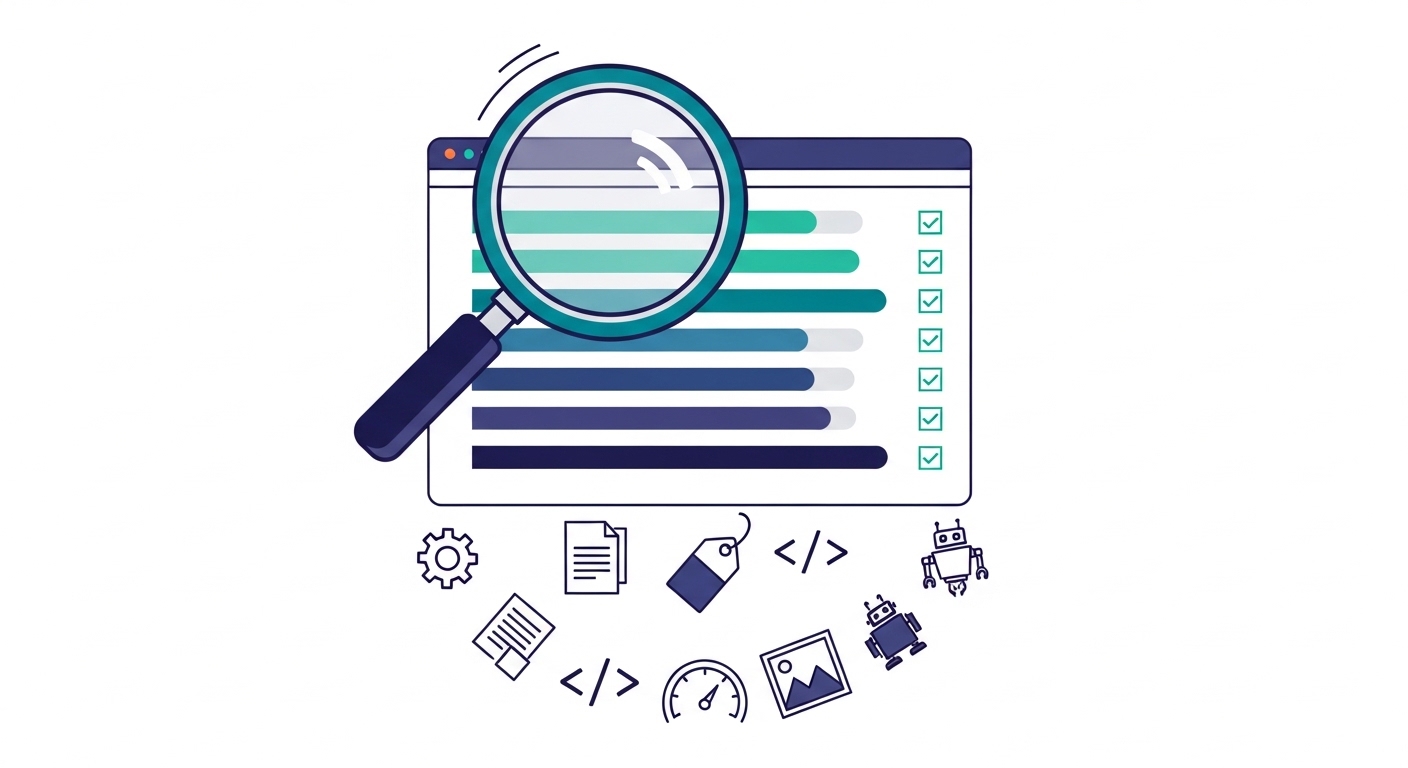
SEO Audit Metrics Explained: What We Measure and Why
Not sure what all those SEO audit metrics actually mean? Here's a plain-English breakdown of the 7 scoring categories, 50+ checks, and severity ratings we use in every Search & Rescue audit report.
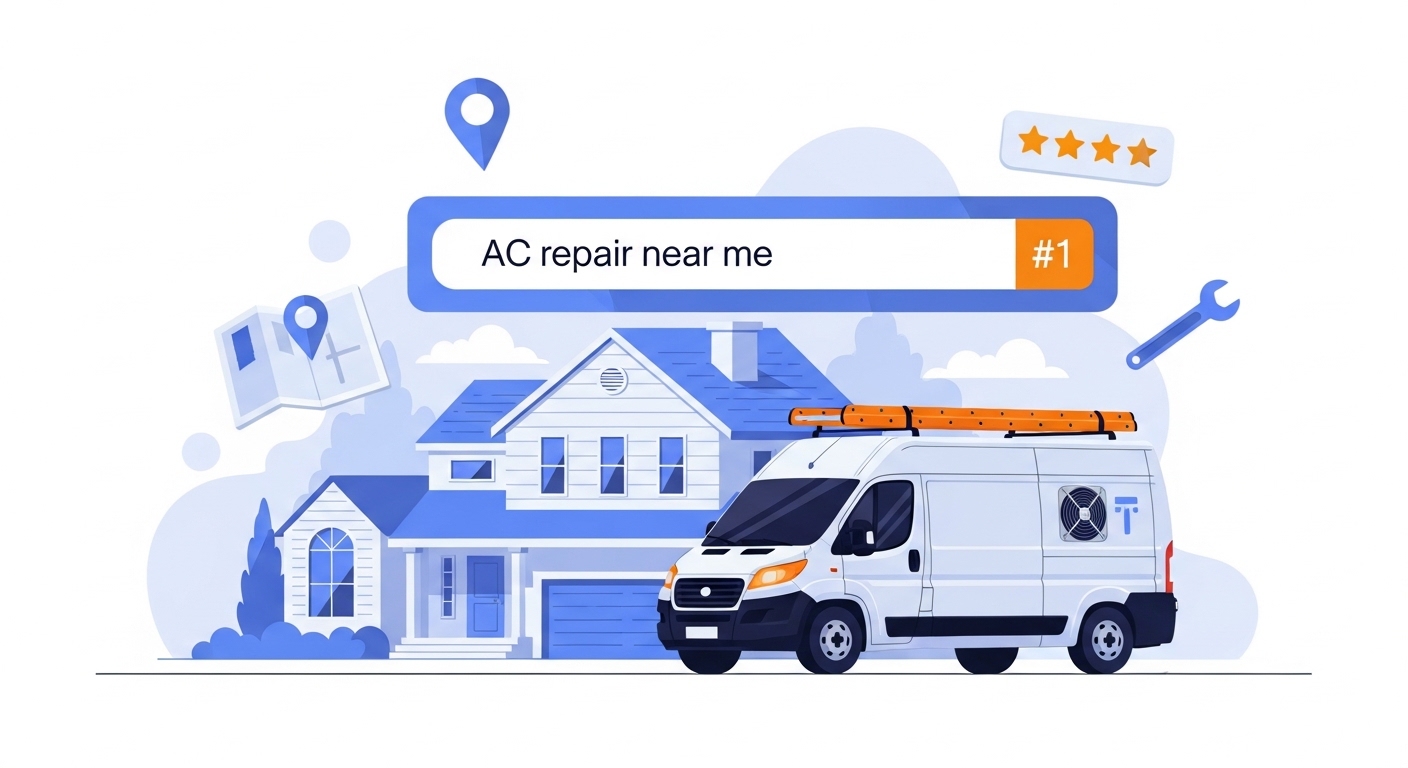
HVAC SEO: A Complete Marketing Guide for HVAC Companies
HVAC SEO can generate 150 to 500 leads per month when done right. This complete guide covers everything HVAC companies need to rank higher on Google, win the local pack, and turn searches into booked jobs.
Get Your Free SEO Audit
Find out how your website scores across 7 SEO categories. Free, no strings attached.
Request Your Free Score